
Meet the spined loach. Cryptic. Inconspicuous. Spends most of its life buried in mud with just its head poking out. Rarely seen, poorly understood and hard to find…
So basically an ecologist.
The spined loach (Cobitis taenia) is one of England’s rarest freshwater fish, and one of the trickiest to survey. We recently found that out first hand on a job within the Ouse Washes in Cambridgeshire.
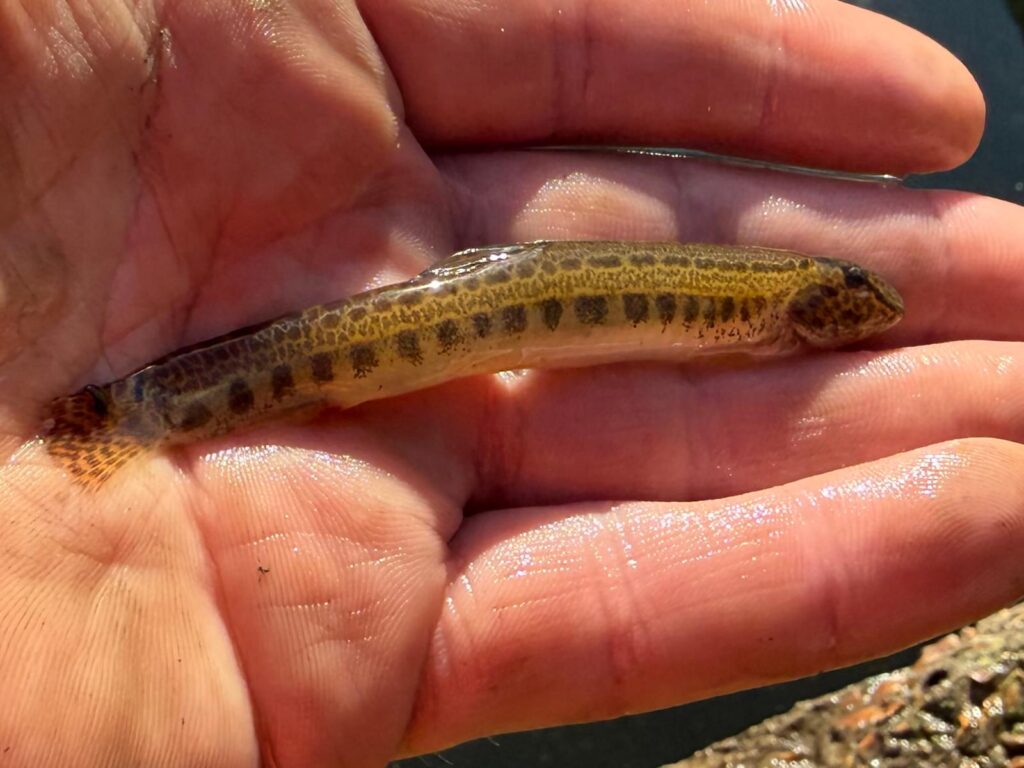
A fish that dodges surveys
Electric fishing is usually the go-to method for finding fish in rivers and drains, but it isn’t a reliable way to find spined loach. They sit tight in the sediment and often don’t show up at all, so a site can look empty when it isn’t.
That matters on construction and maintenance jobs. If a survey misses them, a channel can be drained with the fish still hidden in the mud.
Our job in the Ouse Washes
The Ouse Washes is a Site of Special Scientific Interest (SSSI) and a Special Area of Conservation (SAC). It is one of only four SACs in the UK where spined loach is a main reason the site is protected.
On this job the loach only appeared once dewatering began, and then in numbers. So we changed the plan and switched to staged dewatering. We dropped the water level in steps, which let the fish be found, caught and moved as they came out of the sediment, rather than being left stranded.
Several thousand spined loach later, they were all safely moved to a suitable receptor site nearby.
Where the name comes from
Spined loach get their name from a tiny two-pointed spine tucked into a groove beneath each eye. Normally you’d never see it. But when a spined loach is threatened (by a heron, a pike or an ecologist with a net) it flicks the spine out, which makes it awkward to swallow.
One of England’s “secret seven”
In 2015 the Environment Agency named its “secret seven”, a list of England’s rarest fish: lamprey, Arctic charr, vendace, spined loach, allis shad, twaite shad and smelt.
In the UK, spined loach are only found in five river catchments in the east of England: the Trent, Welland, Witham, Nene and Great Ouse. All five flow east. When the North Sea was dry land these rivers were part of the Rhine system, and when Britain was cut off from mainland Europe the spined loach was stranded here.
Need help with fish on your site?
We’ve been carrying out fish rescues and fish surveys across the UK for over 15 years, using electric fishing, seine and fyke nets, and staged dewatering where the site needs it. We also apply for the Environment Agency permissions on our clients’ behalf.
If you’re planning works in or near water, get in touch and we’ll talk you through the options. You can find out more on our fish surveys page.