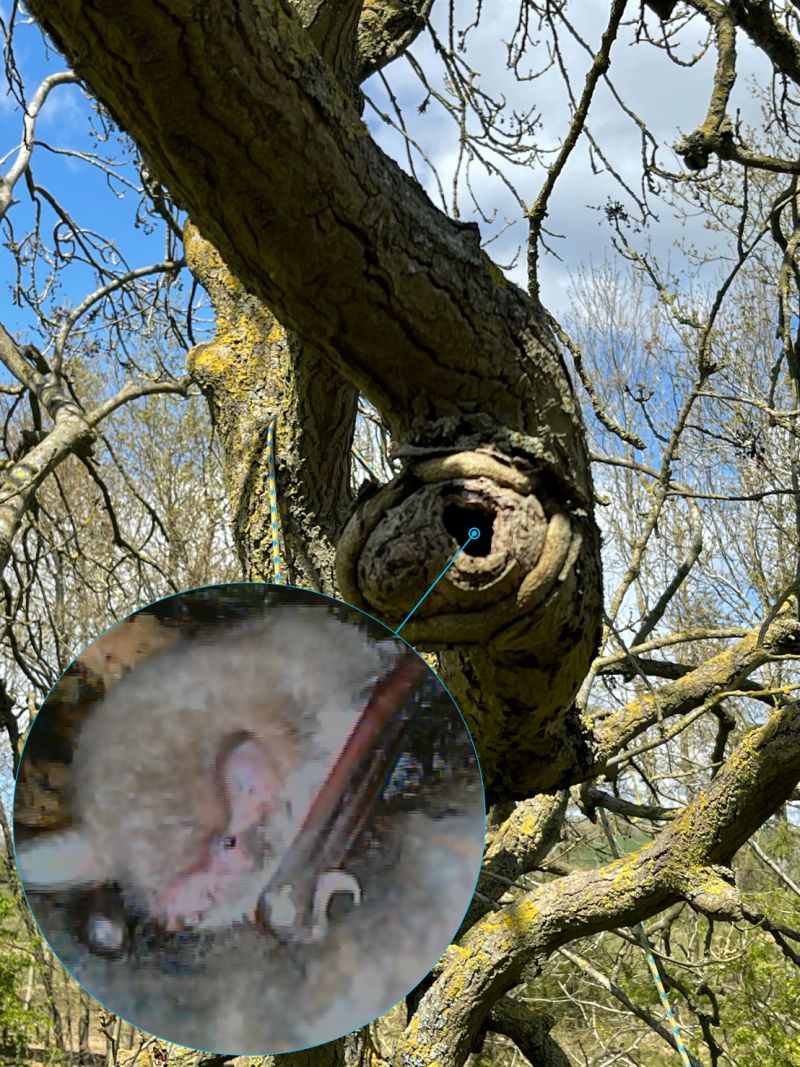
Natterer’s bat roost found on a tree climbing survey
This week’s tree climbing surveys turned up a Natterer’s bat roosting in a rot hole. It’s a good example of why getting up close to a tree can tell you so much more than looking at it from the ground.
What is a tree climbing bat survey?
Trees can have features that bats use for roosting, such as rot holes, splits, cracks and lifted bark. From the ground it’s often impossible to tell whether these features are actually being used.
On a climbed survey, our licensed ecologists climb the tree and check each potential roost feature up close, using an endoscope to look inside for bats or signs of them, such as droppings or staining.
Why climb rather than survey from the ground?
Tree climbing surveys can be a cost-effective way of assessing potential roost features:
- Features can be ruled out. Many features that look suitable from the ground turn out not to be once they’re checked up close.
- Further surveys can often be avoided. If none of the features are suitable, you may not need any more bat surveys on those trees.
- Dusk and dawn surveys can be targeted. Where further surveys are needed, they can focus on the trees and features that matter.
What happens if bats are found?
All UK bats and their roosts are protected by law. If a roost is found in a tree that will be affected by works, we’ll advise on the next steps. That might mean further surveys, changes to the design so the tree can be kept, or a licence from Natural England.
Need trees checked for bats?
Find out more about our aerial tree inspections and bat surveys, or get in touch to talk through your site.