
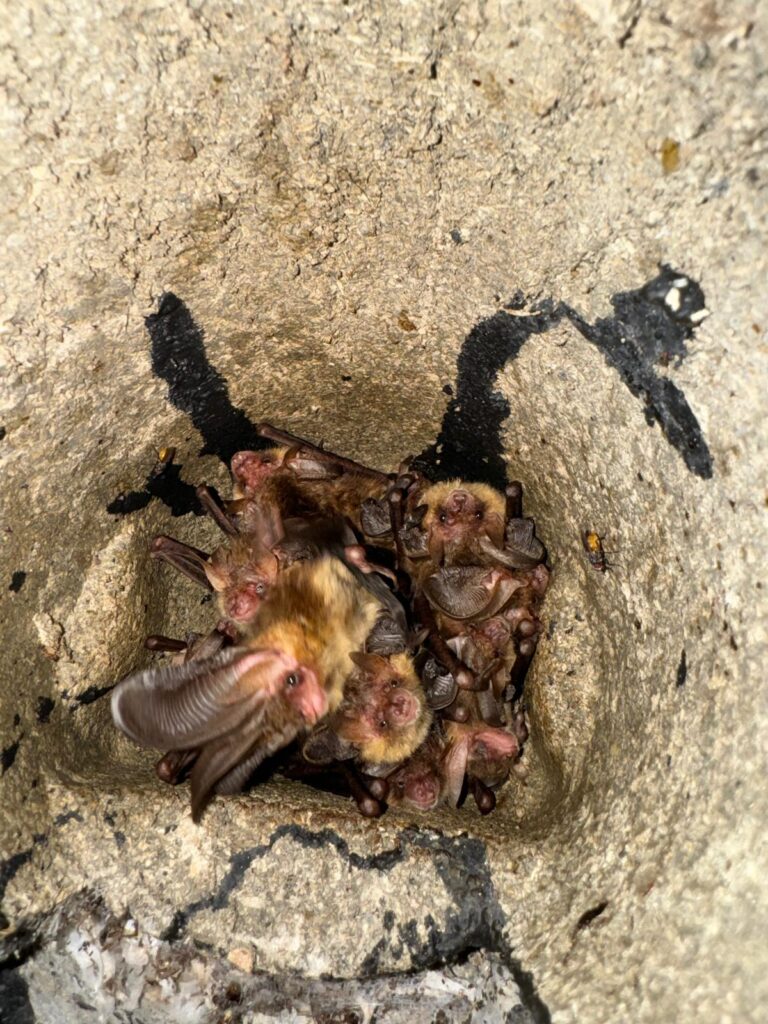
It’s International Bat Week, so we’re sharing one of our favourite bats: the brown long-eared bat. This group was found during this year’s bat box monitoring on a large infrastructure project.
About the brown long-eared bat
As the name suggests, it’s all about the ears. They’re almost as long as its body, and it uses them to listen for insects moving on leaves, so it can pick its prey straight off the foliage. When it’s resting, it often tucks its ears back under its wings.
It’s one of the UK’s most widespread bats, and often roosts in older buildings, barns and trees, as well as in bat boxes.
Why we monitor bat boxes
Bat boxes are often put up as part of the mitigation for development and infrastructure schemes, to replace roosts that are lost or disturbed. Checking them over the following years shows whether the boxes are being used, and by which species.
Because checking a box disturbs any bats inside, it can only be done under licence. The boxes on this project were checked by our licensed bat surveyors, who are all qualified tree climbers, so they can safely reach boxes high up in the trees. Nothing beats getting hands-on with the species.
Bats and the law
The UK has 18 species of bat, and all of them, along with their roosts, are protected by law. If your project could affect buildings or trees that bats might use, you’re likely to need a bat survey before you can get planning permission.
Bat roost assessments of buildings and trees can be done at any time of year, so winter is a good time to get one booked before next year’s survey season starts.
Need a bat survey?
Find out more about our bat surveys and aerial tree inspections, or get in touch to talk through your site.