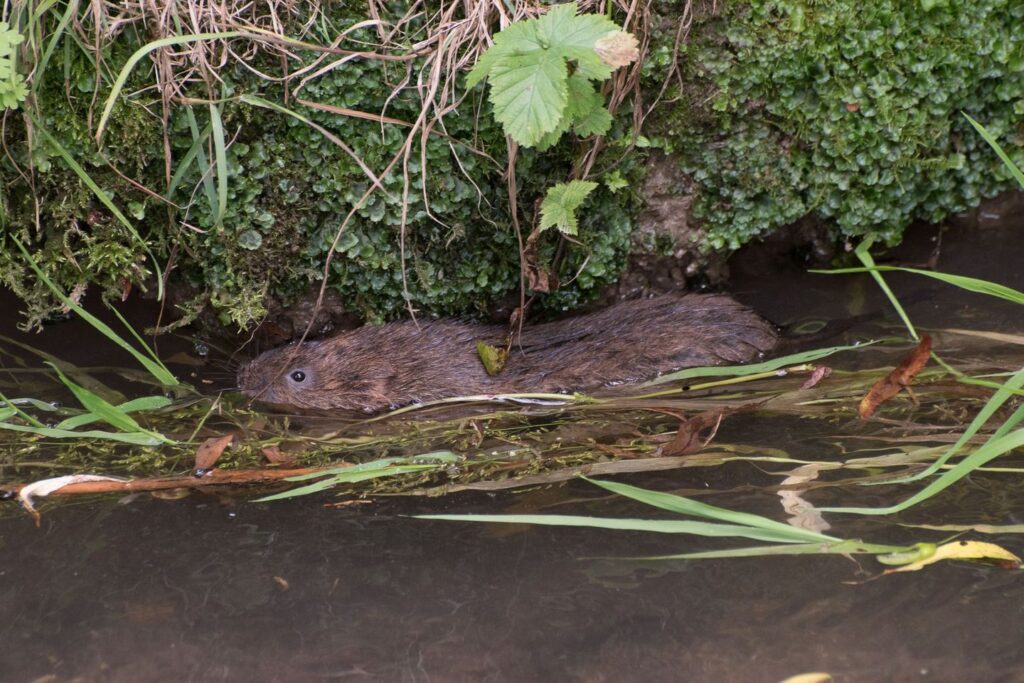
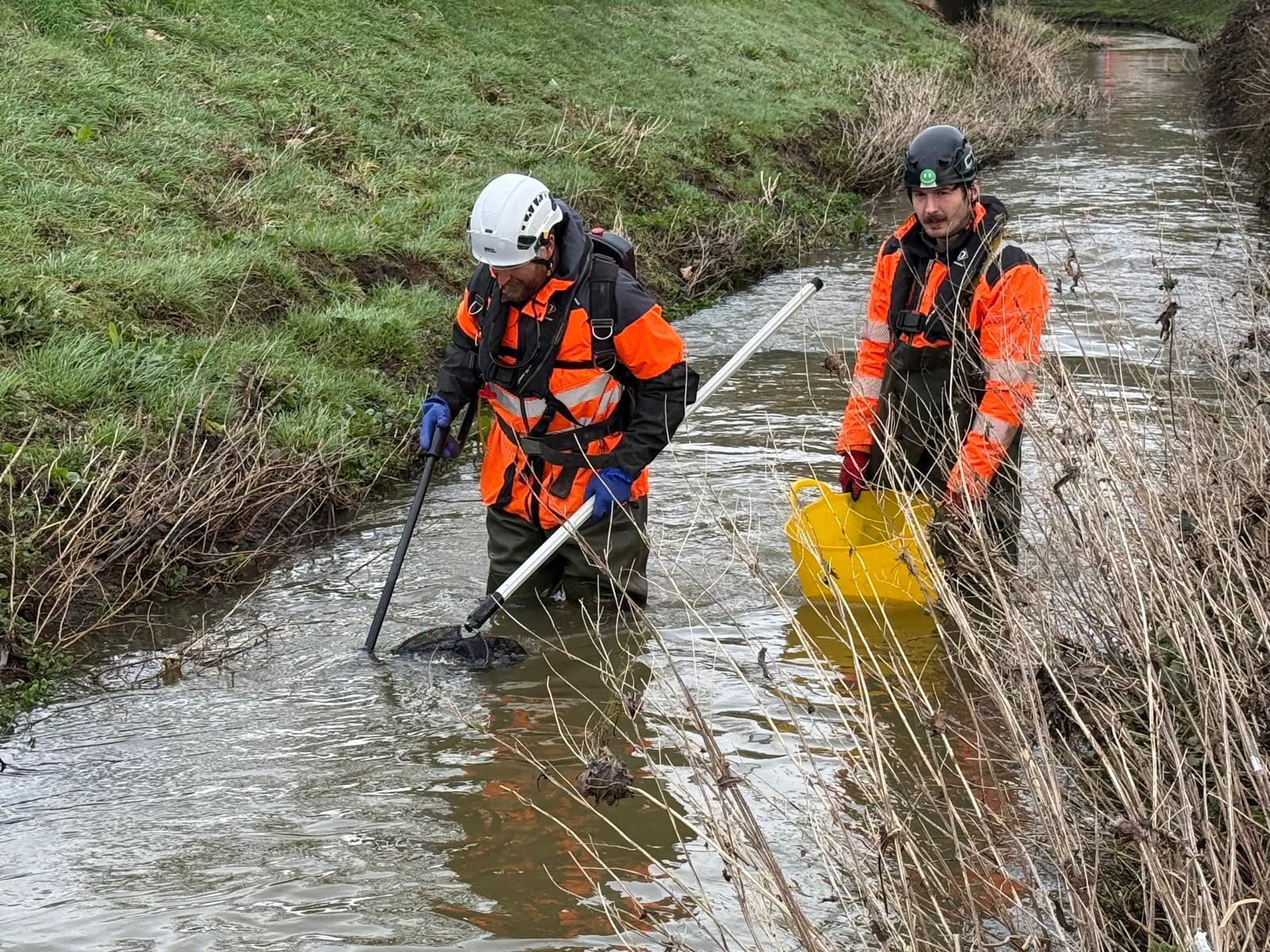
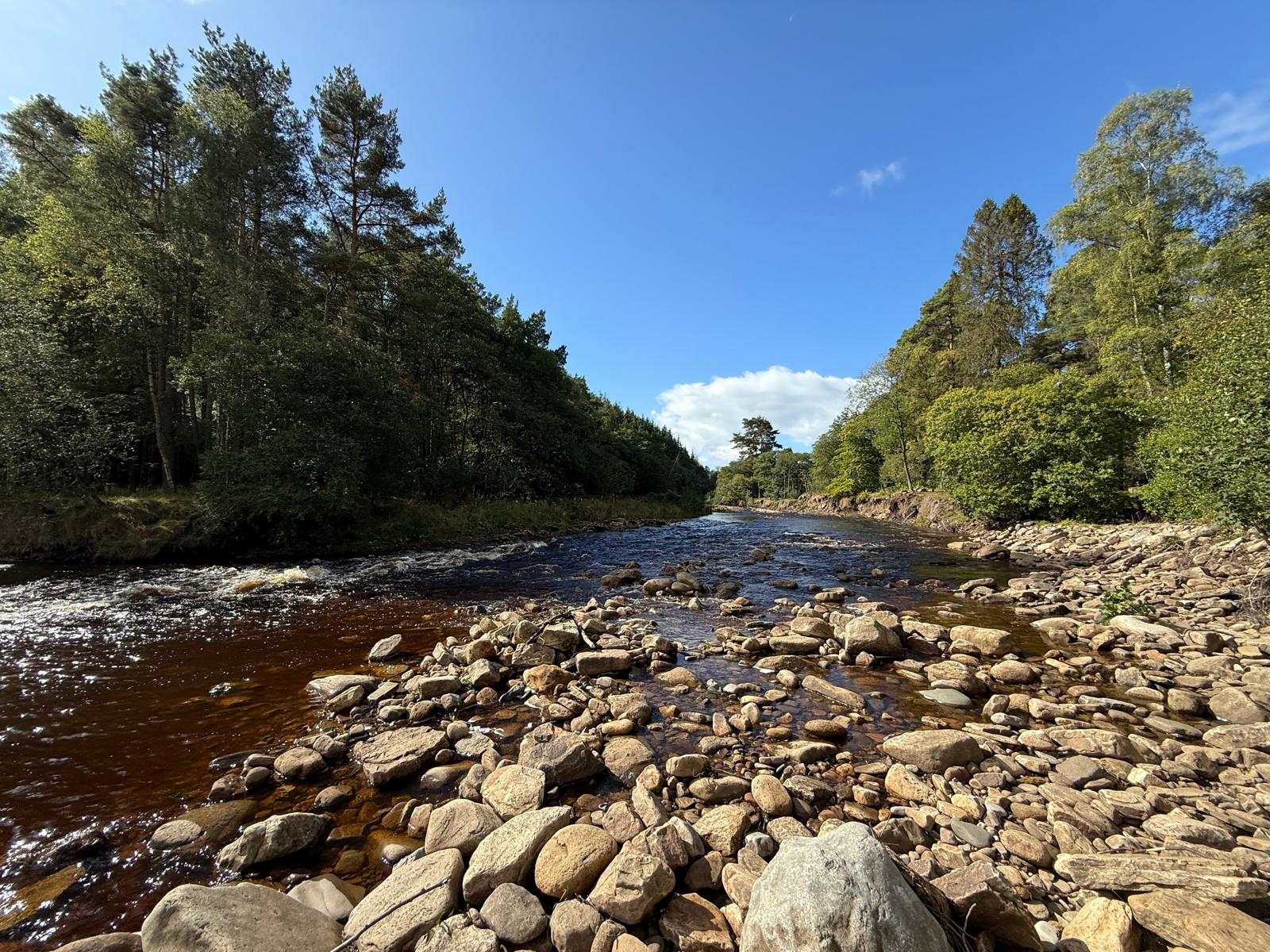
Otters and water voles are fully protected under the Wildlife and Countyrside Act 1981 (as amended). As part of a planning application, your local authority is likely to ask you for an otter or water vole survey as part of a planning application if there are slow-moving streams, rivers or ditches on, or next to, your site.
Phase 1 Otter Survey The first phase for surveying will include a visual assessment of the habitat will be carried out to determine suitability to support otters.
Phase II Otter Survey If potential habitat is identified, an inspection for evidence of otters will be carried out along the watercourse, including footprints, tracks, feeding remains and spraints (droppings). Otter surveys can be carried out between May to September with optimal survey period in spring when evidence is more easily observed. Surveys are done multiple times over a year to cover different time periods.
Water Vole Survey Two site visits to search for evidence of water voles, including feeding remains, latrines, footprints and grazed ‘lawns’. These visits comprise an early season visit (Mid April-June) and a late season visit (July-September). Survey visits are generally completed at least two months apart.