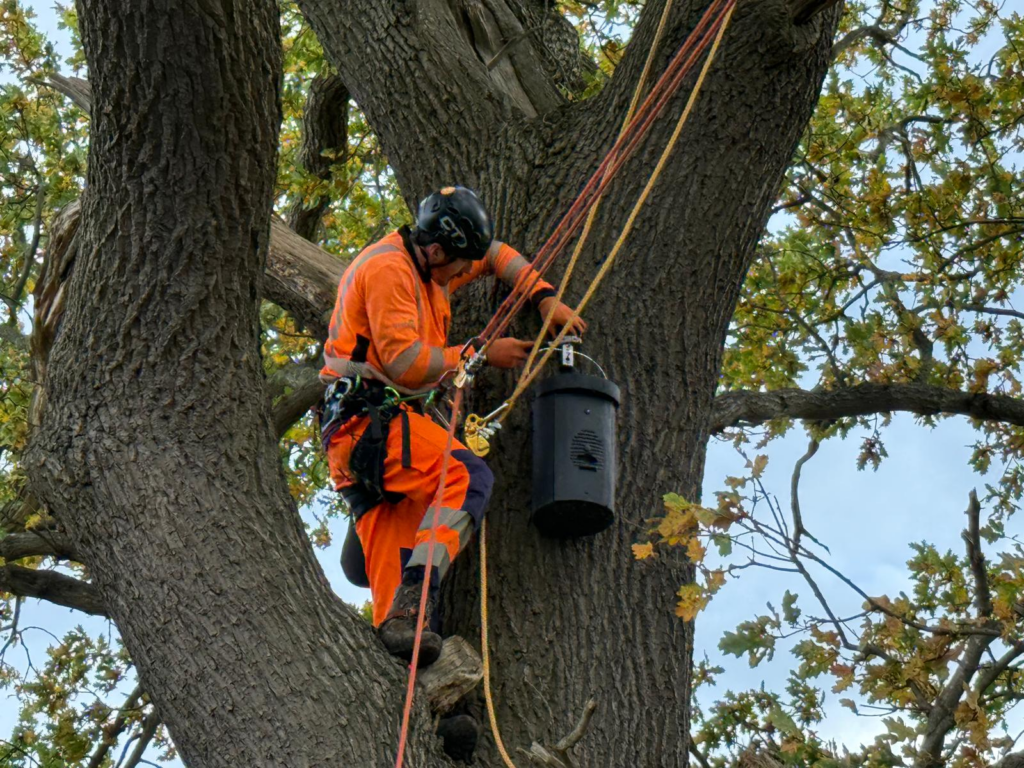
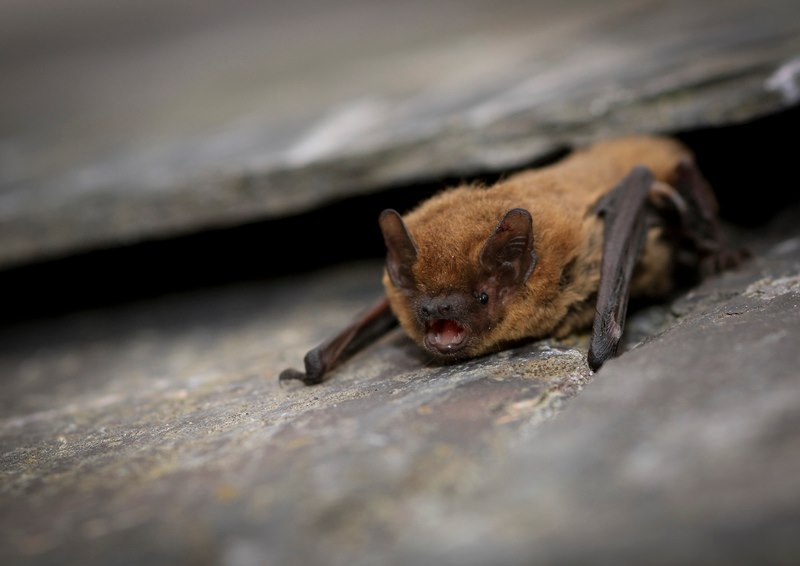
When trees may contain bat roosts, aerial tree inspections are a vital part of ecological surveying and planning. Unlike ground‑level checks, aerial inspections involve qualified ecologists climbing trees to closely examine potential roost features — such as cavities, cracks, holes and crevices — that bats might use.
These inspections allow a detailed assessment of features that are often hidden or inaccessible from the ground, giving a more accurate understanding of roost suitability and presence/absence of bats. Inspection tools such as endoscopes and high‑powered torches are used at height to look inside features and gather hard evidence without the need for nocturnal surveys in many cases.
Aerial tree inspections are particularly useful where trees with Potential Roost Features (PRFs) have been identified and where works (such as tree removal or construction) could disturb bats or their roost sites. These surveys help to fulfil planning requirements, guide mitigation measures, and inform whether further surveys or licensing are required.