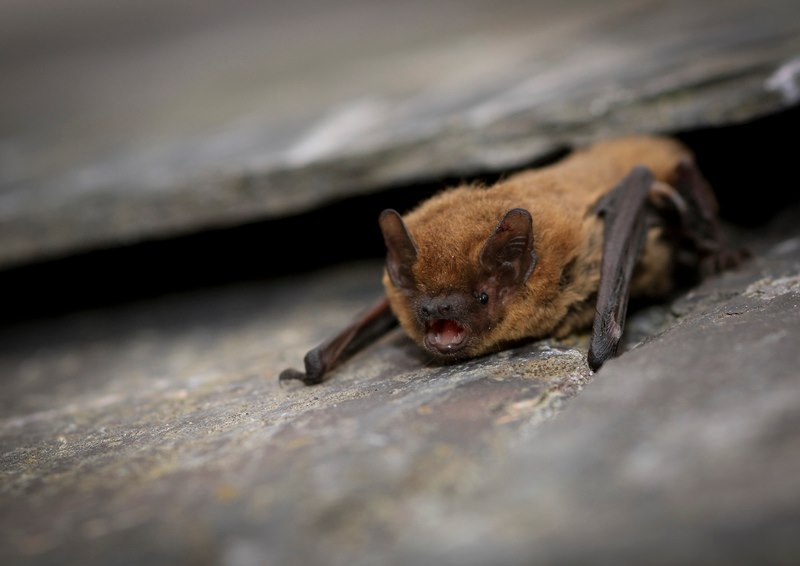
Aerial tree inspections give a close look at trees with features bats could roost in, to find out whether bats or signs of bats are present. They are carried out by our ecologists across most of the UK from our base in Manchester.
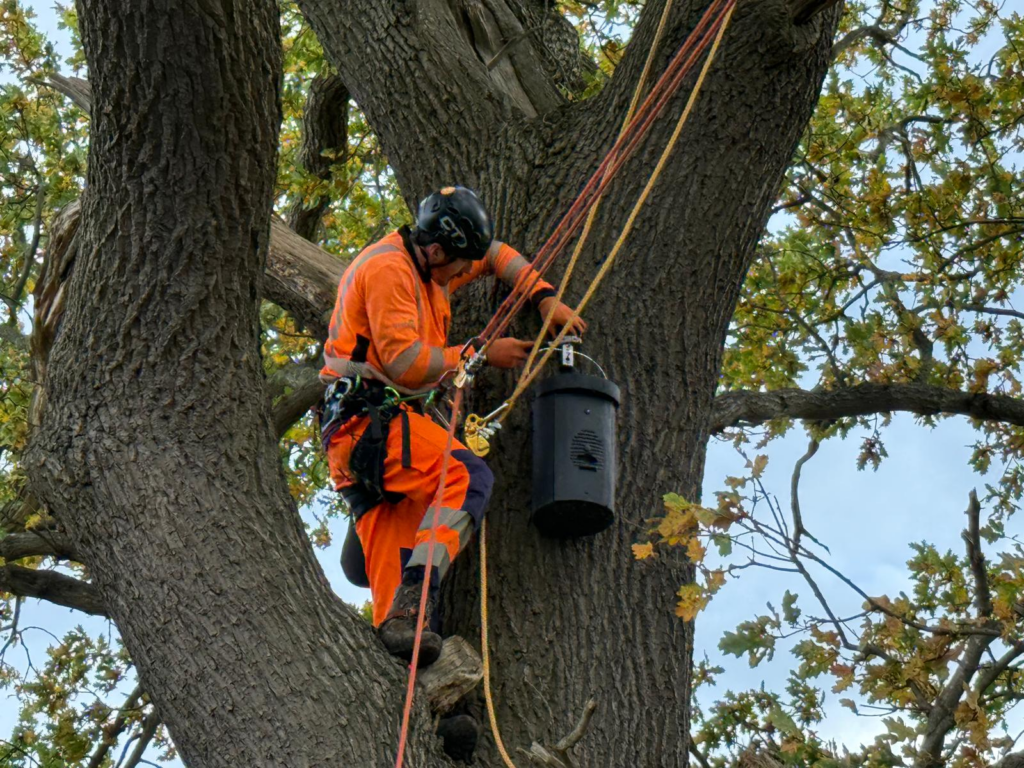
After a ground-level assessment, our ecologists inspect cavities, splits, loose bark and other features at height, using climbing techniques, rope access or elevated platforms. Endoscopes and high-powered torches let us look inside features and gather hard evidence.
This gives a much more accurate picture of whether a tree could hold a roost than a ground-level assessment alone. In many cases it reduces or avoids the need for night-time emergence surveys.
When you might need one
Aerial tree inspections are particularly useful where trees with Potential Roost Features (PRFs) have been found and the works, such as tree removal or construction, could disturb bats or their roosts. The results help meet planning requirements, guide mitigation and show whether further surveys or a licence are needed.
Inspections can be done at different times of year, but winter is often best for spotting features, when there are no leaves on the trees. We’ll advise on timing for your site.